Articles
4 articles
 Ownership
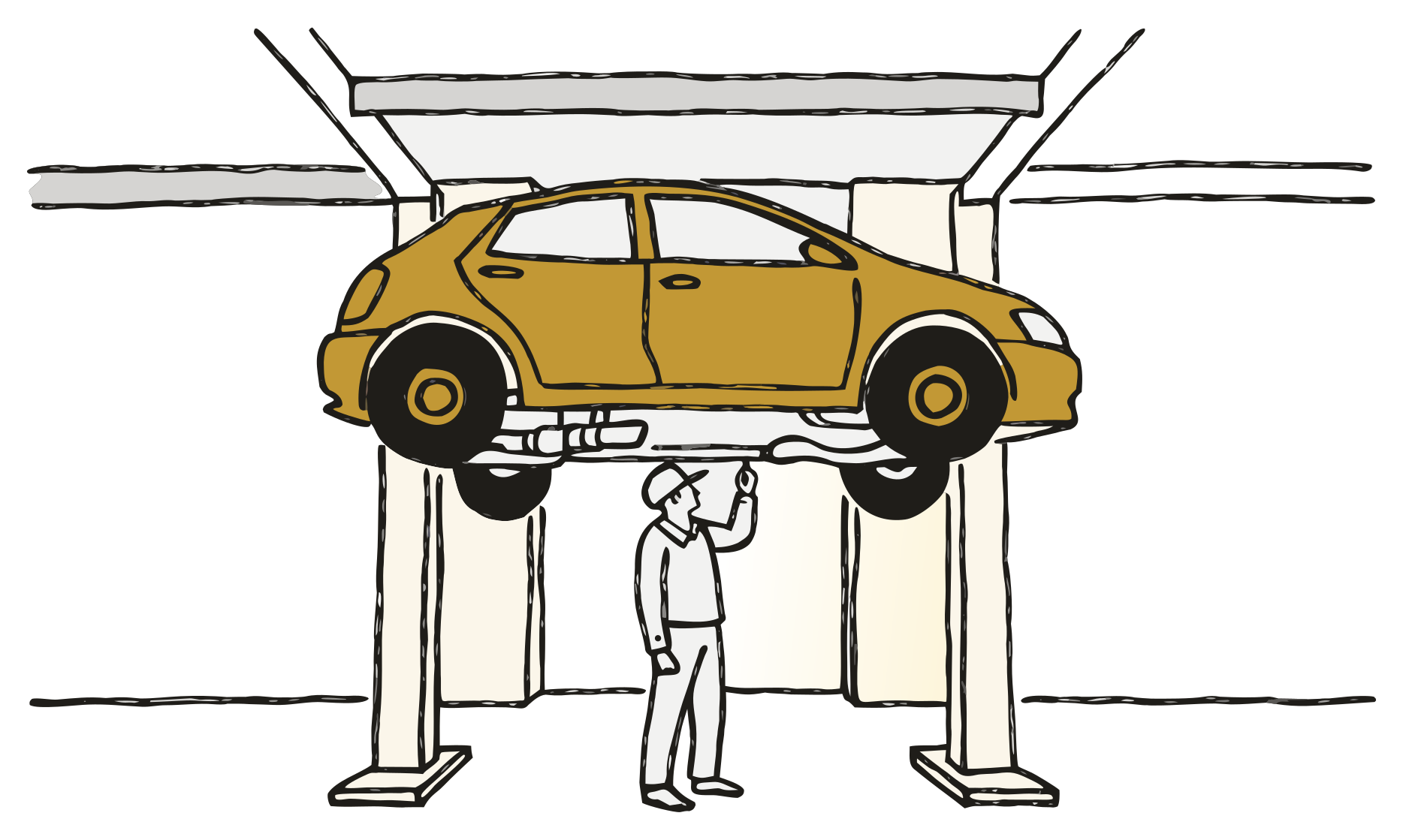
A car fails its inspection underneath, not on the dashboard
On the morning of the test, plenty of people wipe the lights clean and top up the screenwash. The failure almost always comes from somewhere the driver cannot see from the seat: axles, wheels and suspension accounted for 308,940 defects that caused a failure in the 2025 periodic inspections, more than any other category on the car. Brakes come second. Below are the five points where preparation most often goes to waste, and what you can do about each of them a week earlier. Most of them can be checked on your own drive without special tools. Ownership
Vehicle tax follows emissions and mass, not the price of the car
Two cars that cost the same can build up annual vehicle tax at different rates, because the sum takes no account of the purchase price. The tax is made up of a basic tax, which follows the car’s carbon dioxide emissions, and a driving power tax, which follows total mass and fuel type. According to the Finnish Transport and Communications Agency (Traficom), the lowest basic tax is 106.21 € a year, and it is paid by exactly the fuel type whose cars are the most expensive on the used market. Before the sale you can check the tax, on the day of sale the liability changes hands, and after that the tax runs one day at a time whether or not the car is driven. Ownership
A car's compulsory costs do not flex with the purchase price
The price is the figure that sticks in your mind from the purchase. After that a second bill begins: vehicle tax, motor insurance and roadworthiness inspections run on whether the car cost 3,000 or 6,000 euros. The compulsory charges are set by the car's mass, fuel and age, not by what was paid for it. That is why the odometer tells you more about the costs ahead, and in the 3,000–5,999 euro bracket its median reading is 266,000 km.